A Multi-Paradigm Clustering Framework forNutritional Pattern Discovery: Benchmarking andInsights from Fast Food Data
DOI:
https://doi.org/10.61702/IMAI2611_3Keywords:
Unsupervised Learning, Clustering, Nutritional Data Analysis, DBSCAN, BenchmarkingAbstract
The rapid growth of fast food consumption has intensified public health concerns, yet deriving actionable insights from nutritional datasets remains challenging due to high dimensionality, nonlinear feature interactions, and the absence of labeled outcomes. While unsupervised clustering offers a natural solution, existing studies typically evaluate algorithms in isolation, lacking a systematic multi-paradigm comparison tailored to nutritional data.
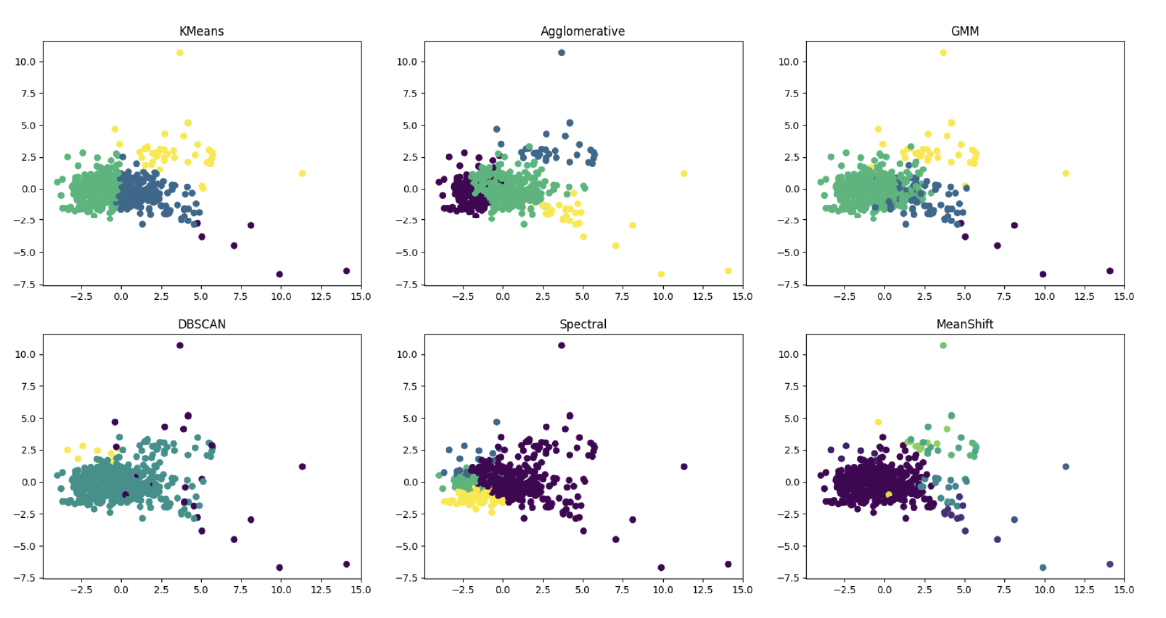
To address this gap, we propose a multi-paradigm clustering framework that systematically evaluates six algorithms spanning centroid-based, hierarchical, probabilistic, density-based, graph-based, and kernel-based methods—KMeans, Agglomerative Clustering, Gaussian Mixture Models, DBSCAN, Spectral Clustering, and Mean Shift. A multi-dimensional evaluation strategy combining Silhouette Score, Principal Component Analysis (PCA) visualization, and a custom Clustering Validity Score is employed to assess both structural quality and interpretability.
Experimental results reveal a clear divergence: DBSCAN achieves the highest Silhouette Score (0.5718) and excels at detecting irregular nutritional patterns and outliers, while KMeans and GMM, though yielding lower separation scores, produce more stable and interpretable clusters suitable for downstream applications.
These findings underscore that no single algorithm universally dominates; rather, algorithm selection should align with application goals—density-based methods for exploratory pattern discovery, centroid-based methods for interpretable categorization. Our framework provides a reusable benchmarking methodology and practical guidance for applying unsupervised learning to nutritional data analysis.
Downloads
Published
Issue
Section
License
Copyright (c) 2026 All authors. All rights reserved.

This work is licensed under a Creative Commons Attribution 4.0 International License.